
Alarm clocks, towels, fur coats,
and other unlikely Christmas survivors
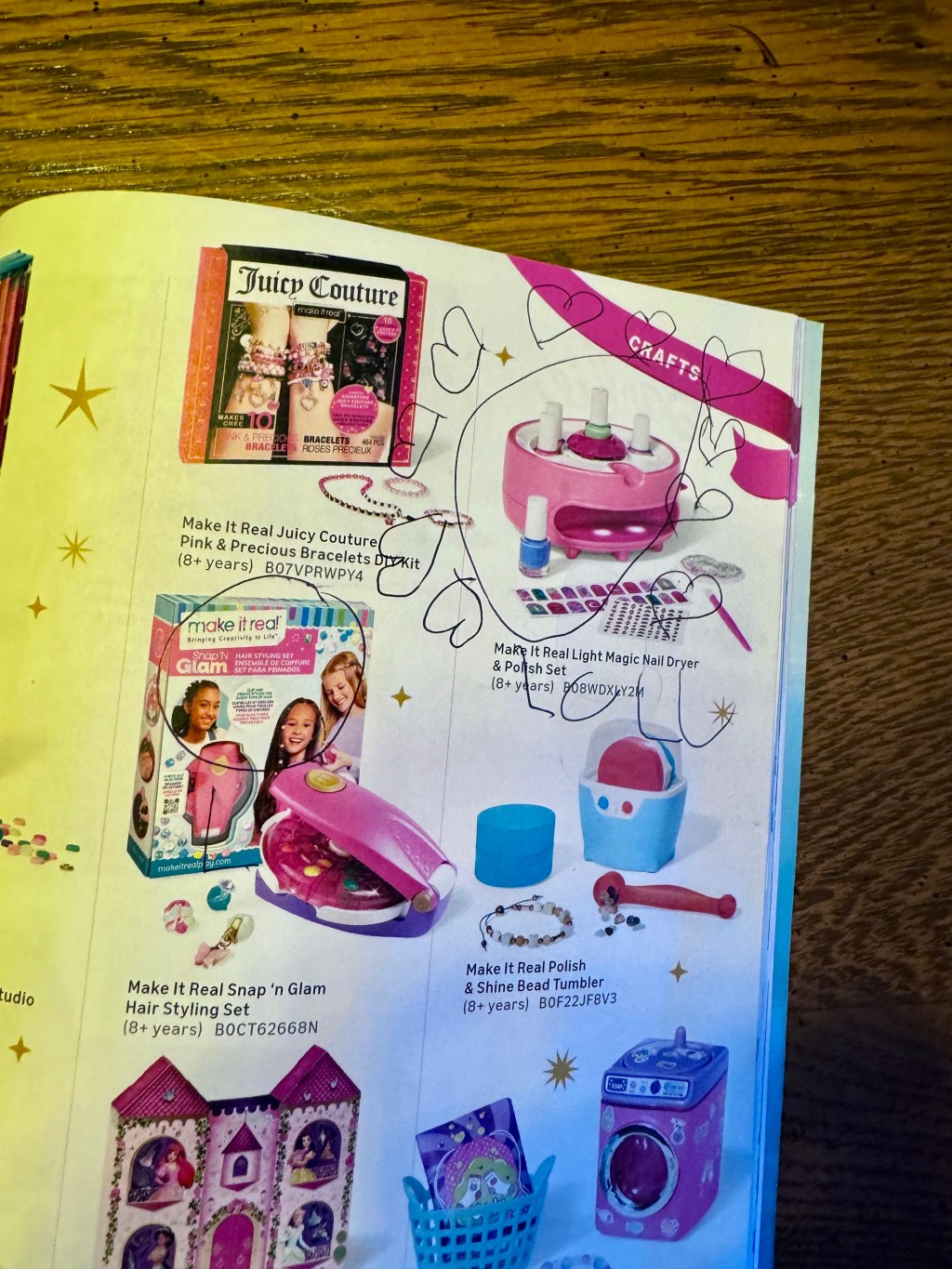
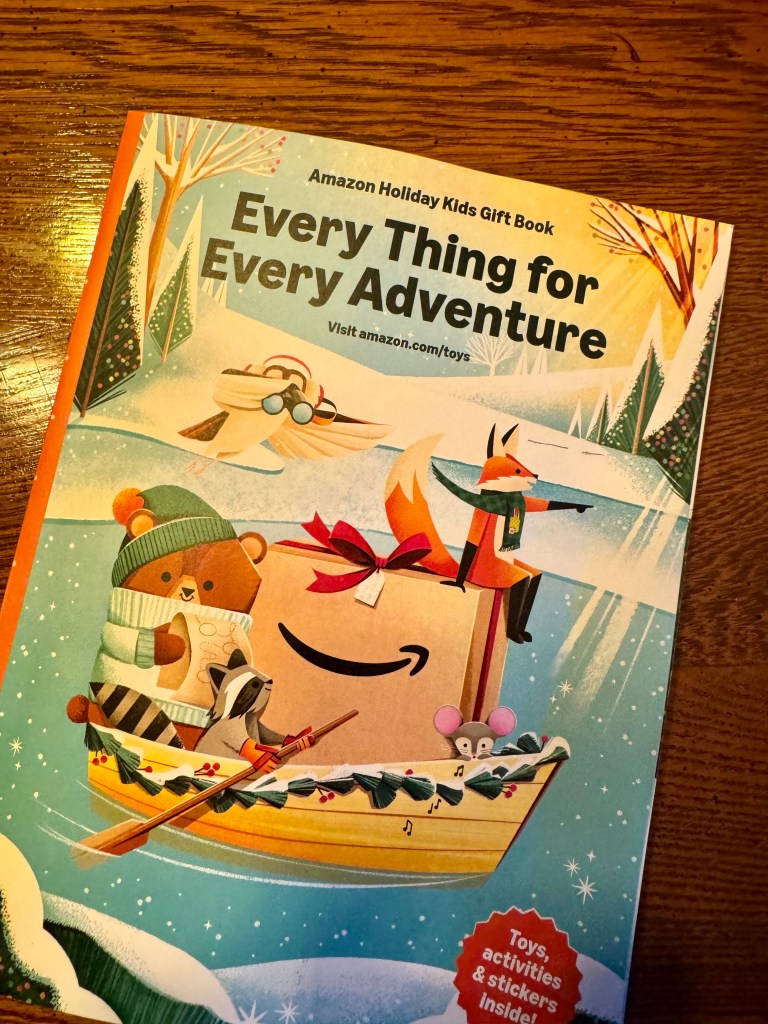
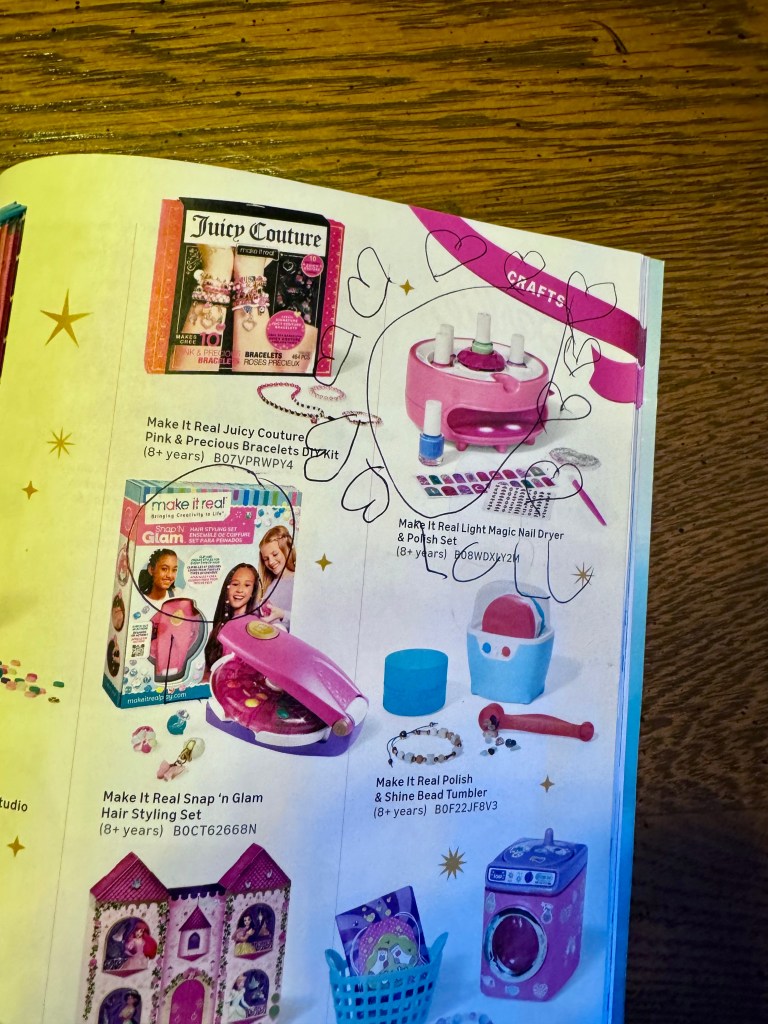
At the tail end of this summer, the Amazon Christmas toy catalogue showed up in the mail. My little Lulu, now seven, pounced on it and immediately began circling her favorites. I probably started this new tradition with her—I vividly remember the thrill when the Sears Christmas Catalogue landed in my mailbox as a kid.
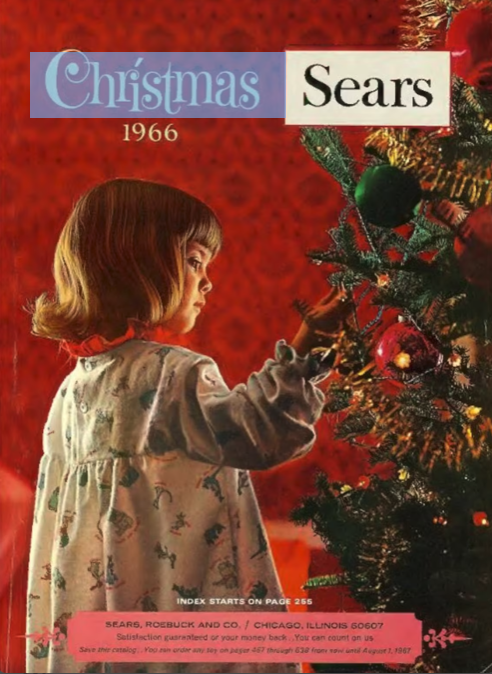
My mom worked part-time as a labor and delivery nurse at St. Mary’s—later Methodist Hospital—and she was also the one who made Christmas magical for our family. Pretty traditional, except for the “working mom” part in the 1960s. Honestly, I think her life was easier with that big Sears book in hand: we marked it up, she called the long-distance number to place the order, and picked it up two or three weeks later. High-tech for its time.
The speed at which a wish list becomes reality has changed, but not the excitement of circling those pages. Of course, we didn’t get everything we marked—but I did get that bright orange alarm clock I obsessed over. I circled it so many times it practically left grooves in the paper. And yes, it showed up under the tree. That loud, unapologetic BRRRRRRRING could wake the dead, and it made me feel surprisingly grown-up and slightly powerful for a ten-year-old.

That memory made me realize how complicated we’ve made Christmas gifts feel lately. We are all worried it’s too much. We’ve lost the simple old fashioned Christmas.
So I did a little digging and learned something fascinating. The complaints—Christmas is too commercial, kids want too much, gift-giving is out of control—have been around for nearly two centuries.
In the early 1900s, families were already agonizing over what to give and how much to spend. Newspapers printed advice columns on “appropriate gifts.” Some writers fretted that children were becoming too focused on stuff. (Sound familiar?)
Then after WWII, the whole thing really took flight. Mass-produced toys, radio ads, and eventually TV commercials created the first true wave of “wish lists.” Kids saw toys months in advance, memorized jingles, and informed their parents with great authority what Santa should bring.
Technically I’m a boomer—but since my dad wasn’t in WWII and my trivia skills put me firmly in Gen X territory, I’m claiming cusp status. Having said that, my three younger sisters and I were absolutely part of that mass-marketing-to-kids era. Chatty Cathy comes to mind. My sisters each got one.
Parents back then were worried about too much spending, too much influence, too much noise. Parents now are worried about…the exact same things. Critics still moan about “holiday frenzy,” but here’s the twist I’ve finally realized: commercialization is part of the fun. It always has been.
Most of us still do all the heart-centered things—church, family gatherings, simple traditions. That hasn’t vanished. I think we’re just so busy worrying about “too much” that sometimes we don’t notice it’s still happening.
This year I especially see people making an effort to shop local where they can—though let’s be honest, this working grandma also grabbed the Amazon catalogue after Lulu was done circling and got a fair amount of shopping handled.
I’ve heard a little grumbling from their parents (my kids) about “too many toys” or the cheesy little things the kids desperately want and the adults absolutely do not. But this grandma? I cannot take that wish away from my grandbabies. It’s everything. Consider it a gift from you to me. Let me have this.
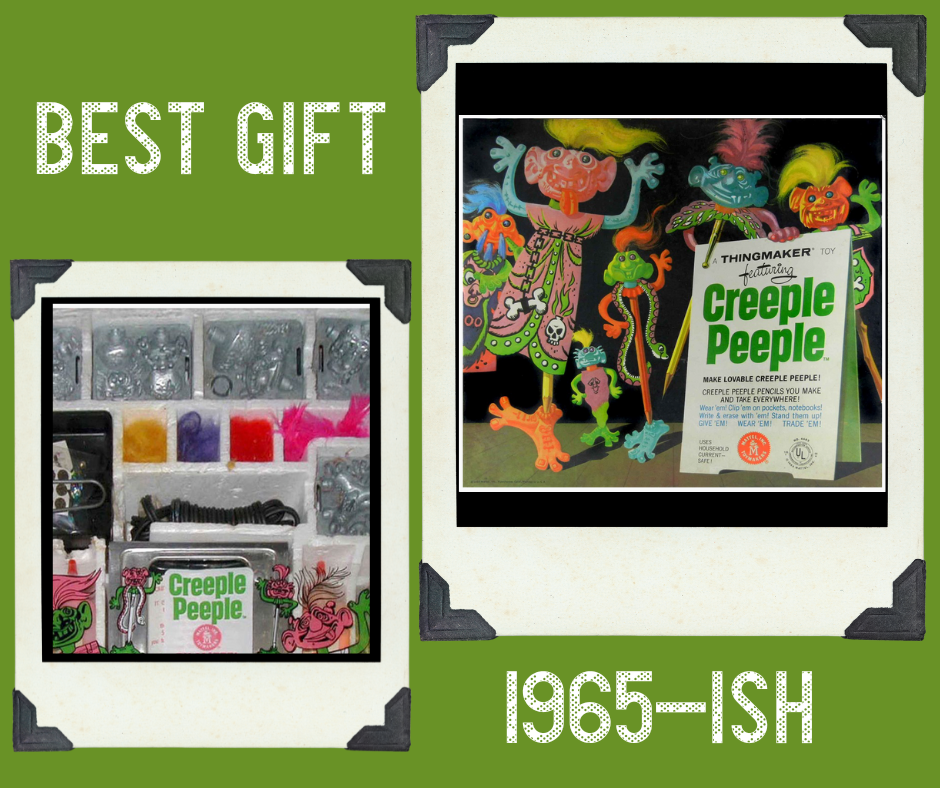
I’m sure my mom thought my Creeple People machine was not only smelly but totally ridiculous. But I was so happy. That warm, plasticky “cooking” smell still lives somewhere in my brain. I couldn’t wait to get back to school after Christmas break with my Creeple People figures topped onto my school pencils.
And here’s the funny thing: the gifts that stay with us aren’t always the big ones—they could be the odd ones, the simple ones, the ones we didn’t expect to matter.
Like that bright orange alarm clock.
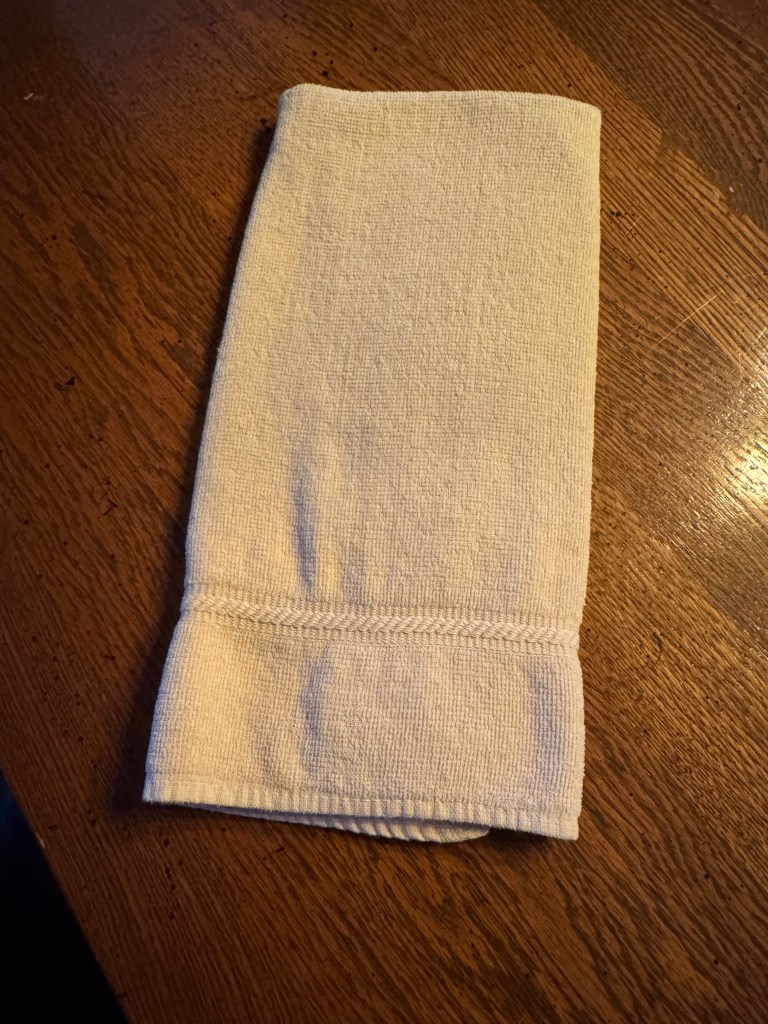
Or the set of cream-colored towels—technically a wedding present from my Auntie Margaret. I thought they were boring at the time (cream?! when sea-foam green was all the rage), but those towels lived a long, layered life: first as display towels, then upgraded to “fancy towels,” then downgraded to bath towels. I still have one hand towel left, and it now resides at my shop. All summer it wiped condensation off my poor overworked cooler every morning. And it was so absorbent! Every time I use it I think of Auntie Margaret—her practicality, her kindness, her really, really good taste, and I miss her.
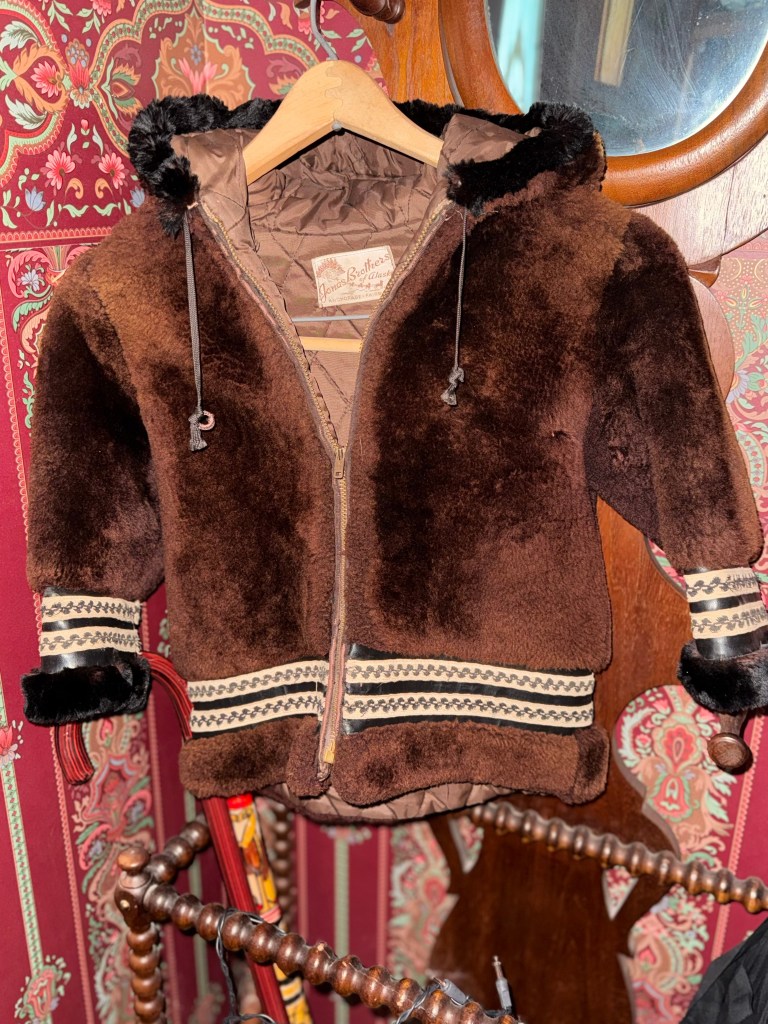
And then there was the real Alaskan fur jacket I was given at age five. My godmother was a stewardess (yes, that was the actual title). She was stationed in Alaska. It was extravagant, unnecessary, and completely unforgettable. I strutted around like a tiny snow-queen celebrity until the sleeves hit my elbows. Then it went to my three younger sisters, who wore it through blizzards and snowball fights. Then it moved on to my cousins—three more girls. Eventually it found its way back to me, well-worn and well-loved.
My grandmother also was gifted a sealskin coat (hold on to your pearls, that was Alaska then), It too was worn to the max, always Christmas Eve mass for years. It was also well loved. So later I had Kersten Furs use pieces of her coat to repair the sleeves and hood of mine. Lulu has tried it on but hasn’t fully claimed it; Carter and Wennie are the girls up next. I’m hopeful. Did my godmother, Auntie Mary—who just passed at 92—know she was creating a multigenerational treasure? Probably not at the time. But I told her more than once how much I loved that coat. It remains one of the most meaningful gifts I’ve ever received—not because of its value, but because of the history it built.
These are the gifts that endure. The ones that settle into memory and stay there.So maybe the answer isn’t to stress about commercialism or budgets or the perfect present small or big. Maybe it’s simply to pay attention, choose thoughtfully, and let the little things do their magic. Even the tiniest gift—and yes, even one that’s part of the over-the-top spectacle—can turn into a story that lasts.
And maybe that’s really the point—the stories that last long after the wrapping paper has been carefully folded away for next year. Wait. Who does that??
Merry Christmas.
 Midnight Smack BY FU
Leave a comment